
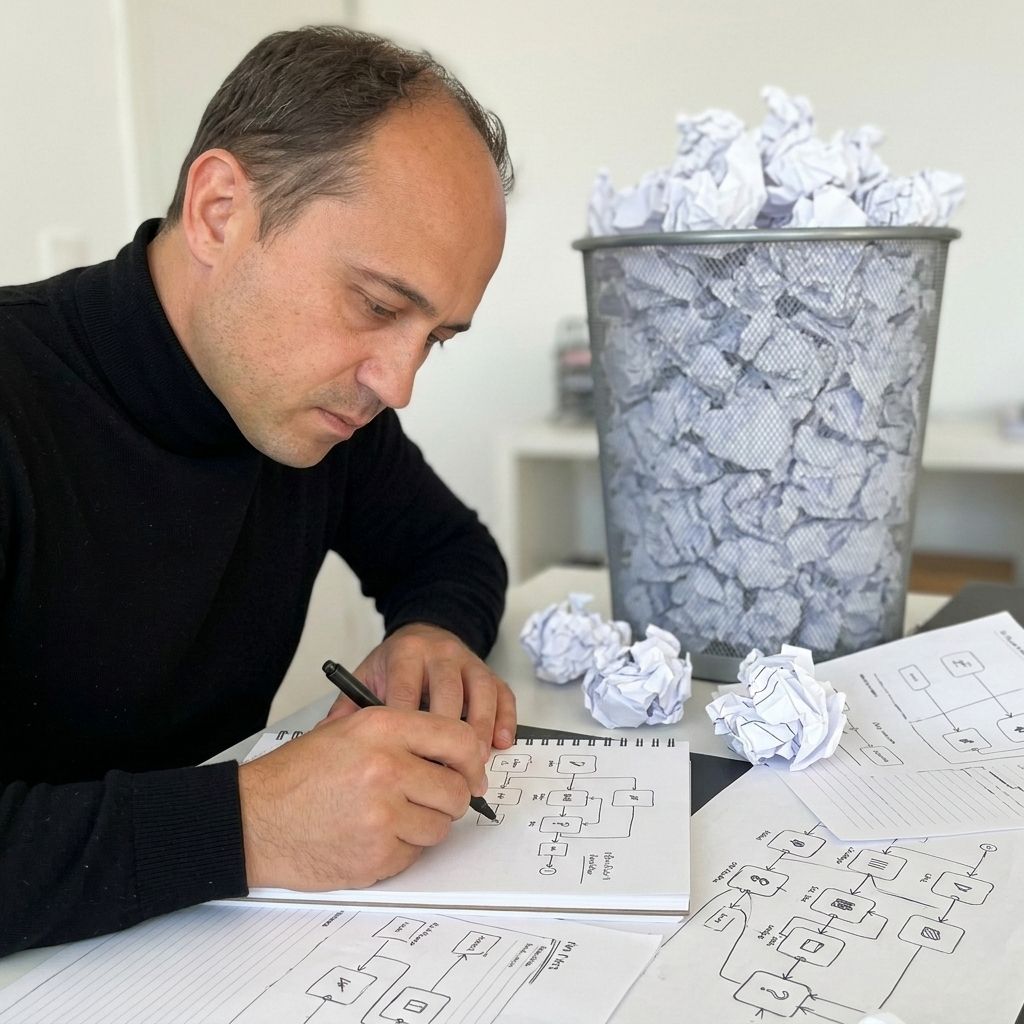
I wanted to write about how to connect Google Sheets with Notion through n8n.
Or about how to build a machine that sends you ready-to-approve posts every morning.
But I’ll write about something else.
Recently I’ve built dozens of automations for myself to remove routine, get my time back, and honestly, to feel a bit smarter.
About 80% of them died.
I launched them, tested them, looked at the results, and a few days later I simply stopped opening them.
I figured out why. Three reasons.
Often we think we’re wasting time on one thing, while the real problem is somewhere else.
I built a system that automatically tailored my CV and cover letter for each job application. It looked great.
Until I noticed that every job application form still has its own questionnaire and you end up pasting everything manually anyway.
The automation solved a problem that didn’t really exist.
“I’ll improve the usability later” is a classic trap.
I built a bot: you say “meeting on Friday at 3 PM,” and it adds the event to your calendar automatically.
I stopped using it because it sometimes made mistakes. I could have fixed them. I didn’t. The bot died.
Todoist implemented the same feature properly, and that’s exactly why people actually use it.
A bot writes texts. The first three are great.
Then you start noticing patterns.
Then you realize they all look the same.
A small simple bot does not produce, out of the box, what you actually want.
Making it truly varied turns into a much bigger project.
First understand where time is actually being lost and why.
Only then build automation.
Otherwise you end up with a very elegant automation solving a problem that never existed.
What usually kills your automations?
Three nearby posts worth opening next.

Mar 20, 2026
Three automations that still work because they remove friction without trying to replace judgment.

Mar 14, 2026
A practical look at why automation becomes fragile and what to design before you connect your first node.
Mar 30, 2026
A broken coffee machine is a good reminder that real users behave like people, not like the system designer hoped they would.
If you have a manual workflow between tools, I can help map the logic, design the system, and automate it in a way your team can actually use.
